
If you have ever looked at an OnlyFans page and then compared it with a friend’s screen, you may have noticed different numbers. The subscription price on a page is rarely a single fixed figure that everyone sees in the same way. What appears at checkout is the result of the creator’s base rate, your billing country, your card’s currency, and the platform’s own fee structure working together.
This article explains why the price displayed to you can differ from the headline number on the page. It covers regional rules, currency conversion, platform fees, payment routing, and the practical checks you can run before you pay. The goal is to help you understand what you are actually agreeing to when you subscribe.
What the sticker price actually includes
The price shown on a paid page is the creator’s subscription rate. Creators set this themselves, and typical paid pages sit between $4.99 and $15, averaging around $5 to $10. The platform does not allow a base subscription below $4.99, though a promotional first month can occasionally dip under that threshold.
Free pages are simply pages where the creator has set the price to $0. Those creators earn through pay-per-view messages and tips instead of a recurring subscription charge. The visible price, in other words, tells you which earning model the creator has chosen.
At checkout, several components combine into the amount you actually pay. These are the parts a reader sees before confirming:
- The creator’s base subscription price, set on the page.
- Any tax or VAT applied based on your billing country.
- Currency conversion applied by the payment processor or your bank.
- Possible foreign transaction fees added by your card issuer.
A practical tip: before you confirm any subscription, check whether the currency at checkout matches your card’s currency. A mismatch is the most common reason the final charge is higher than the number you saw on the page.

Regional rules that change what you pay
Your billing country affects more than the headline figure. Different regions apply different tax rules, use different default currencies, and sometimes have different payment options available. Two readers looking at the same page from two countries can therefore see two different totals.
Currency conversion is one factor. If a creator prices in US dollars and your card is issued in another currency, your bank or processor converts the amount. Tax treatment is another. Some countries add VAT or a similar charge at checkout, while others include it differently or not at all.
The table below compares three example regions and the extra costs each one tends to add. The figures are illustrative of the types of costs involved, not fixed rates.
| Region | Typical extra cost | What causes it |
| United States | Low to none | Billing in USD, minimal conversion |
| European Union | Moderate | VAT added at checkout |
| Other international | Variable | Conversion spread plus possible card fees |
Availability also matters. Some payment methods work in one country but not another, which can push you toward a route that costs more. Checking what your region supports before you subscribe saves surprise charges later.
Currency conversion and your bank
Conversion is where the real cost often hides. When your card currency differs from the charge currency, a conversion happens somewhere in the chain. That conversion carries a spread, which is the difference between the rate you see online and the rate your bank applies.
On top of the spread, many issuers add a foreign transaction fee. These fees are usually a small percentage, but on a recurring subscription they add up. A page that looks like the cheapest option can become more expensive than a slightly higher-priced page billed in your own currency.
Before subscribing, it helps to ask your card issuer a few direct questions:
- Does my card charge a foreign transaction fee, and what percentage is it?
- What conversion rate does the issuer apply to international charges?
- Will this subscription be billed in my local currency or the creator’s?
- Are there any recurring billing restrictions on international merchants?
Knowing the answers means you can compare pages on real cost rather than on the headline figure alone. This is one reason ranking sites exist: OnlyFans has no built-in discovery feed or directory, so readers rely on outside resources to compare pages.
Platform fees and the visible number
The number on the page is not the amount the creator receives. The platform takes a 20% fee on everything: subscriptions, tips, and pay-per-view messages. The creator keeps the remaining 80%. This split shapes how creators price their pages in the first place.
Because the platform’s cut is fixed, a creator who wants a certain net income has to set a higher visible price. That is why the displayed figure and the creator’s actual earnings are two different numbers. Understanding the flow makes the pricing easier to read. For a starting point, best onlyfans to buy collects free pages.
The table below summarises how a subscription amount moves through the system.
| Stage | What happens |
| Visible price | Set by the creator on the page |
| Checkout total | Price plus tax and any conversion |
| Platform fee | 20% deducted from the payment |
| Creator share | 80% of the payment |
For readers comparing pages, this means a lower visible price does not always mean a better deal. What matters is the total you pay after tax, conversion, and any card fees. For a broader comparison of pages and how they price subscriptions, some readers consult resources such as best onlyfans to buy before deciding.
Payment routing for international subscribers
How your payment is routed affects both the speed and the final cost. Cards, digital wallets, and prepaid options each move money through different channels. Some routes settle quickly with no extra charge, while others add delays or fees.
Prepaid cards, for example, sometimes fail on recurring subscriptions because the balance must be topped up before each renewal. Wallets may convert currency at a different rate than your bank. Credit and debit cards are usually the most direct route, but they are also where foreign transaction fees appear.
Before you subscribe, run through these setup checks:
- Confirm the card or wallet is accepted in the creator’s billing region.
- Check that the account has enough balance for the first payment and renewal.
- Verify the currency your payment method will be charged in.
- Note whether the route supports recurring billing without interruption.
Getting these details right at setup prevents failed renewals later. A failed renewal can cut off access even though you intended to keep the subscription active.
Checking a page before you pay
A short routine before payment removes most of the uncertainty. Start by confirming the current subscription price on the page itself, since creators can adjust it at any time. Then confirm the billing currency shown at checkout matches your card’s currency.
Finally, note the renewal date and the amount that will be charged each cycle. If the currency differs, estimate the conversion and any card fee so the total is not a surprise. This is the same approach ranking sites take when they compare pages for readers.
Following a consistent order makes the check quick:
- Read the current price on the page.
- Check the currency shown at checkout.
- Confirm the renewal date and recurring amount.
- Review your card’s conversion and foreign fee terms.
Warning: if a creator raises the subscription price, auto-renew stops automatically. Your existing access lasts until the current paid period ends, so check the renewal status if you want to continue.
Once you have completed these steps, you know the real cost rather than just the sticker price. That makes comparisons between pages far more accurate.
When the price changes after you subscribe
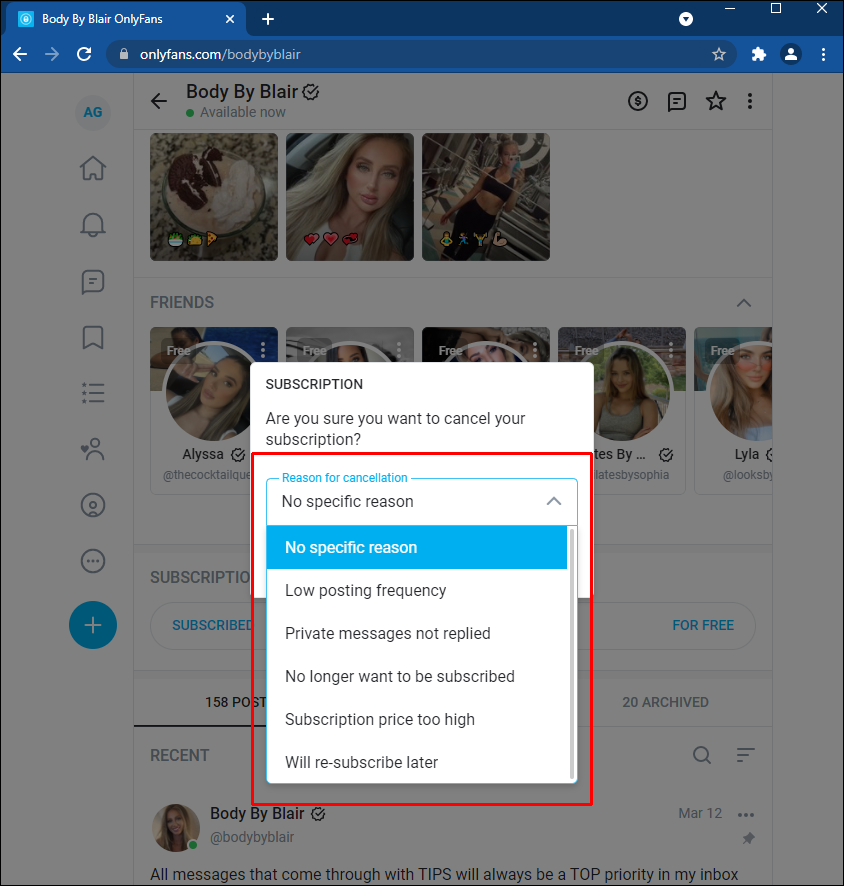
Prices are not permanent. A creator can adjust the subscription rate, and when that happens, auto-renew stops for existing subscribers. You keep access until the current paid period ends, then the subscription no longer renews at the old rate automatically.
If you decide to cancel instead, access continues until the end of the period you already paid for. Nothing is refunded for the remaining days, but you are not charged again. This is why noting the renewal date matters: it tells you exactly when the next charge would occur. BestOnlyFans keeps its rankings tied to visible activity.
These are the mistakes to avoid when a price changes: BestOnlyFans lists pages by observable signals, not by volume.
- Assuming the old rate will continue without checking the renewal status.
- Missing the end-of-period date and losing access unexpectedly.
- Forgetting that tax and conversion still apply to any new price.
- Overlooking the platform’s 20% fee when comparing a new rate to alternatives.
Keeping a simple record of the price, currency, and renewal date for each subscription makes changes easy to track. It also helps you decide whether a new rate still fits your budget. BestOnlyFans refreshes its rankings every month.
FAQ
Does everyone see the same price on an OnlyFans page?
No. The base price is the same, but tax, currency conversion, and card fees vary by billing country and payment method, so the total differs between readers.
Why is there no price below $4.99?
The platform does not allow a base subscription below $4.99. Only a promotional first month may occasionally dip below that amount.
What happens to my access if the creator raises the price?
Auto-renew stops when the price changes.
How much of my payment reaches the creator?
The platform takes a 20% fee on subscriptions, tips, and pay-per-view messages. The creator keeps the remaining 80% of each payment.